What freezes well in meal prep (and what doesn't)
The short answer
Key takeaways
- Moist, cooked, saucy dishes freeze best: stews, soups, curries, bakes, muffins.
- Cool completely, freeze in single portions, and label with the date.
- The USDA says frozen leftovers stay safe indefinitely; quality is best for roughly 3–4 months, and we suggest 2–3.
Contents
The rule of thumb
Dishes that are moist, cooked and a little saucy freeze best: the sauce protects the food. Foods that are crisp, raw or very watery change texture. That one idea explains almost everything on this page.
What freezes very well
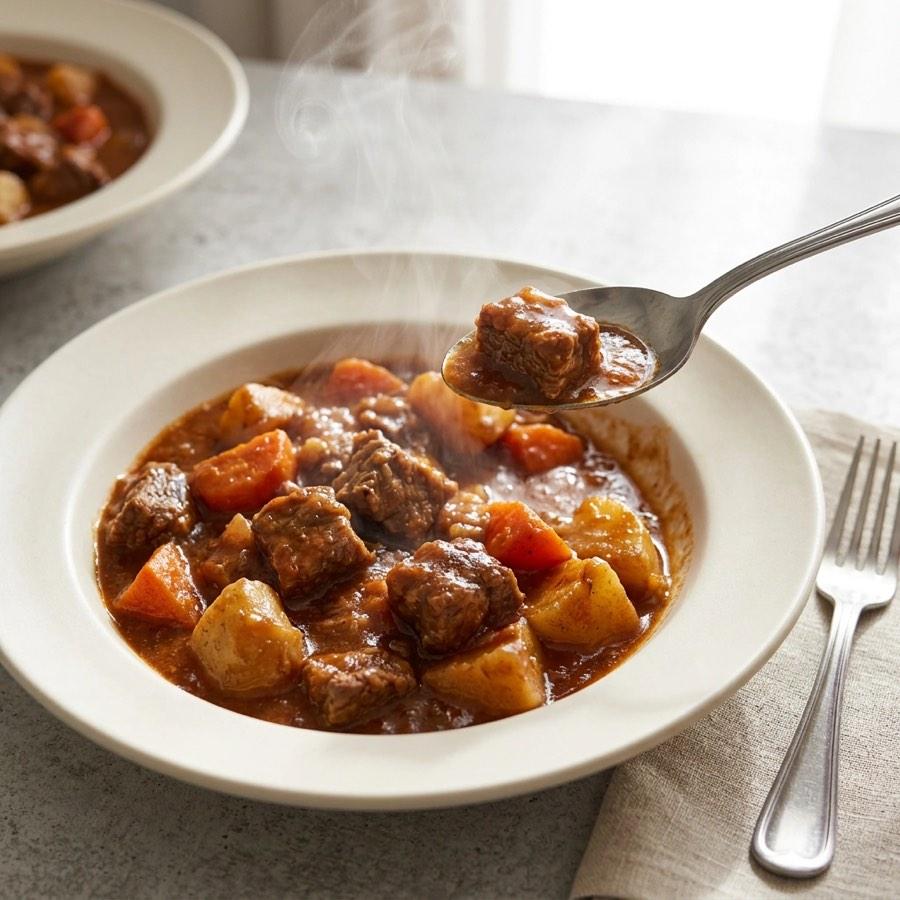
- Stews, braises and curries. Flavors often improve after freezing. Beef stew, chicken curry, dahl, chilli.
- Soups and purées. Leave a little room at the top of the container, because liquids expand when frozen.
- Cooked beans, chickpeas and lentils. Freeze them in their cooking liquid.
- Pasta bakes, lasagna and gratins. Freeze in individual portions.
- Meatballs and cooked chicken pieces in sauce.
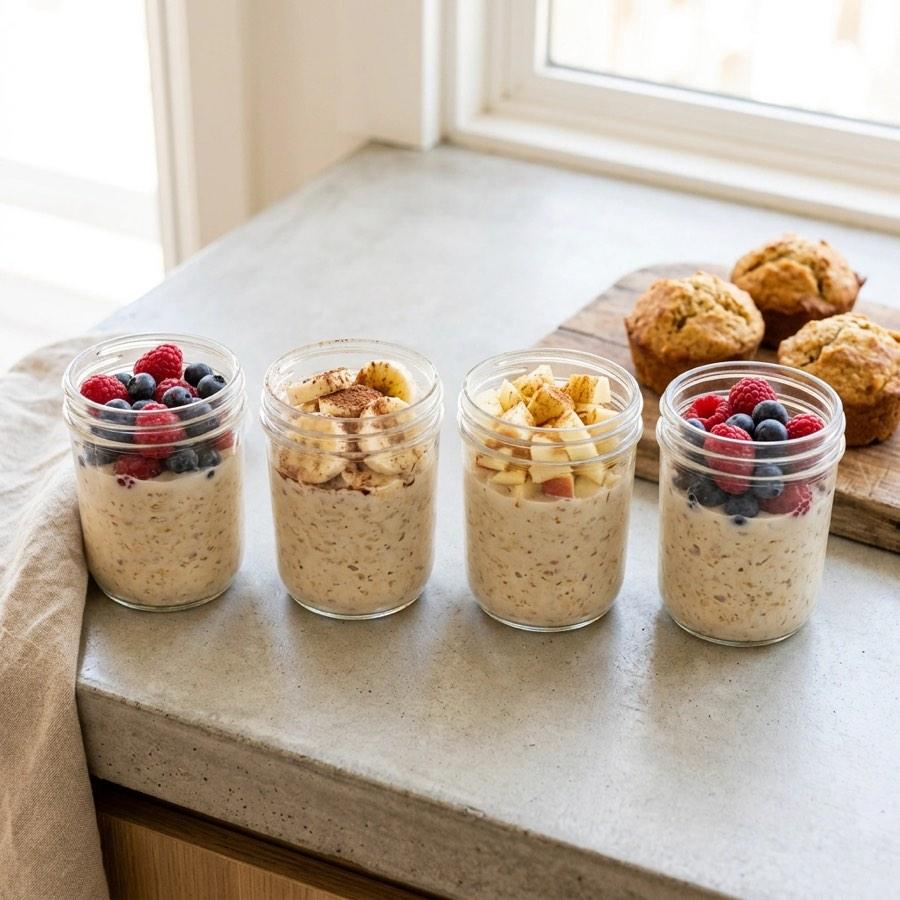
- Muffins, baked oatmeal, pancakes and waffles. Freeze in a single layer, then bag.
- Cookies and brownies, with the topping left off.
What freezes less well
- Fresh salads and raw vegetables. They turn limp when thawed (lettuce, cucumber, tomatoes).
- Soft fresh herbs. Keep them separate and add them fresh.
- Mayonnaise and yogurt-based sauces. They can separate. Add them after reheating.
- Cooked potatoes in pieces. They can turn grainy or watery. Mashed potatoes freeze better.
- Crispy and fried foods. They get soggy. Reheat in the oven to partly recover.
- Soft cheeses such as fresh mozzarella. The texture changes.
- Hard-boiled egg whites. They become rubbery.
How to freeze properly
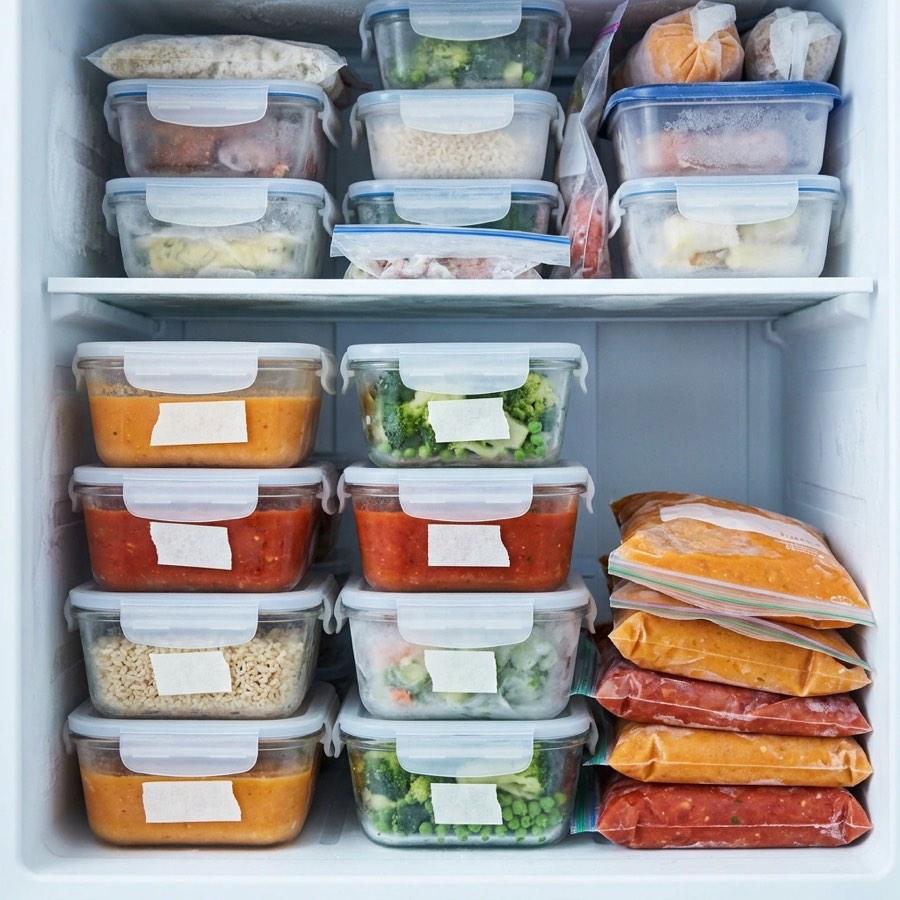
- Cool the food first. Never put a hot dish in the freezer: it raises the temperature around other food and creates frost.
- Portion it. One portion per container means you thaw only what you eat.
- Freeze flat. Bags frozen flat take less room, freeze faster and thaw faster.
- Remove air. Squeeze the air out of bags and leave a little headspace in rigid containers.
- Label. Write the dish and the date. A freezer without labels becomes a lottery.

How long do things keep?
The freezer keeps food safe for as long as it stays at 0 °F (-18 °C): what changes is the quality. For cooked dishes, aim for:
| Food | Best quality |
|---|---|
| Stews, curries, soups | 2 to 3 months |
| Pasta and rice dishes | 2 to 3 months |
| Cooked chicken, meat in sauce | 2 to 3 months |
| Muffins, pancakes, baked oatmeal | 2 to 3 months |
| Fish dishes | 1 to 2 months |
Thawing and reheating
Move the dish to the fridge the evening before, then reheat until steaming hot (165 °F / 74 °C). Soups and stews can go straight from the freezer into a covered pot over low heat. Never thaw on the counter. More in our guide on reheating meal prep.
Nonnio tells you what to freeze
In Nonnio, each recipe says whether it freezes, and for how long, so you can decide while you build your menu. Dishes that do not freeze well are marked. Browse the recipes, or read how long meal prep lasts.
Sources
Frequently asked questions

Food kept at 0 °F (-18 °C) stays safe indefinitely, according to the USDA, but quality declines over time. For cooked leftovers, the USDA mentions three to four months for good quality; two to three months is a cautious target for the best flavor and texture.
Yes, ideally in portions, cooled quickly. Pasta in sauce freezes better than plain pasta. Reheat with a splash of water.
Not always. Soups and stews can go straight into a pot. Thawing in the fridge overnight gives the most even result for most dishes.
If it was thawed safely in the fridge and not reheated yet, it can be refrozen, but quality drops. It is better to freeze in single portions and thaw only what you need.
This article is for information only and does not replace the advice of a health or nutrition professional. Storage times are cautious guidelines.