How to save time cooking: 7 batch cooking habits that work
The short answer
Key takeaways
- Read first, chop everything in one block, start the longest dish.
- Cook in parallel and use a timer for each step.
- Clean as you go and set your containers out before packing.
Contents
1. Read everything before you start
Spend five minutes reading all your recipes. Spot the steps that can happen at the same time, the oven temperatures, and what needs to rest or cool. This is the cheapest time saving you can make.
2. Chop everything in one block
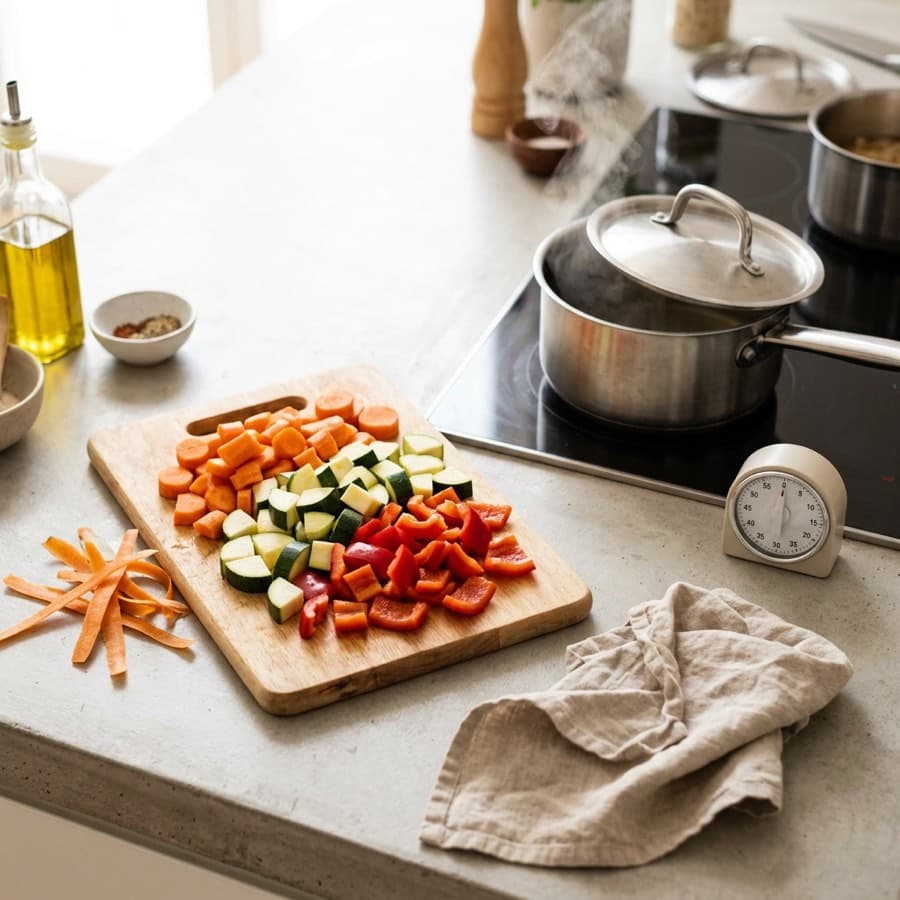
Wash and cut all the vegetables, mince the garlic, grate the cheese and measure the spices at the start. Doing the same task in a row (all the onions, then all the carrots) is faster than moving recipe by recipe, and nothing slows you down later.
3. Start with the longest dish
Whatever needs the oven or a long simmer starts first: roasted vegetables, a stew, rice. While it cooks without you, you work on the others. The wait becomes useful time.
4. Cook in parallel
Use all your heat sources. The oven roasts, a pot simmers, and a pan handles the quick dish. If two recipes need the oven at similar temperatures, cook them together. If they differ by a few degrees, a small compromise is fine.
5. Use a timer for every step
When you juggle three dishes, you will forget one. A timer per step frees your head. Set it before you move on, and let it tell you when to come back.

6. Clean as you go
Fill the sink with hot water at the start. Wash the cutting board and knife between jobs, and rinse the pans while they are still warm. The final cleaning drops from forty minutes to ten.
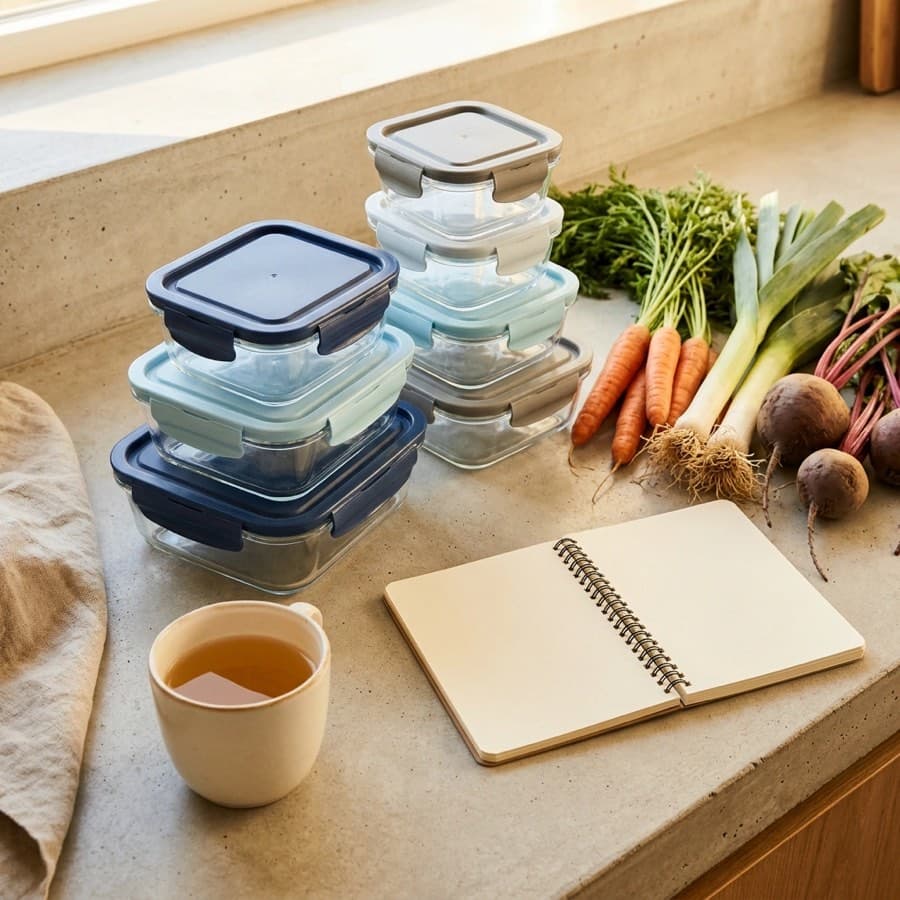
7. Get your containers out ahead of time
Open the cupboard, line up the containers, and have your labels ready before the food is cooked. Packing becomes a two-minute job instead of ten.
The mistake to avoid
Doing everything in a single block, step after step, and waiting around for each dish to finish. Several things can move forward together: that is the whole secret of a short session.
What it looks like in practice
Here is a typical order for three dishes. You turn the oven on and chop everything. The tray of vegetables goes in the oven. A pot of grains and a stew start on the stove. While they cook, you prepare the quick dish. Timers ring, you stir, you taste. At the end, everything cools together on the counter and you pack it.
Nonnio does the ordering for you
Nonnio's guided mode orders the steps of all your recipes into one sequence: the oven preheats while you chop, identical tasks across recipes are merged, and timers are built in. You can run it step by step, or in a quicker mode if you are experienced. See how it works, or start with our guide to your first batch cooking session.
Sources
Frequently asked questions

Two to three hours for a week of meals with two or three recipes, once you have a rhythm.
Cooking in parallel: while something roasts or simmers, you prepare the next dish instead of waiting.
Yes. Doing all the chopping in one block is faster than switching between recipes, and everything is ready when you need it.
Yes. When you run several things at once, a timer per step frees your mind so you do not have to watch the clock.
This article is for information only and does not replace the advice of a health or nutrition professional. Storage times are cautious guidelines.