Batch cooking for beginners: how to prep a week of meals in one afternoon
The short answer
Key takeaways
- Pick 2–3 recipes that share ingredients and shop once, the day before.
- Chop everything first, start the longest dish, then cook in parallel with timers.
- Cool in shallow containers and refrigerate within 2 hours (USDA).
Contents
- What batch cooking is (and what it isn't)
- Why it works
- Before you start: the kit
- The plan, step by step
- Common first-time mistakes
- How to choose recipes that batch well
- A sample first session, hour by hour
- Troubleshooting: the usual problems
- A quick food-safety checklist
- How Nonnio makes it easier
- Your first-week checklist
What batch cooking is (and what it isn't)
Batch cooking is simple: you cook the meals of several days in one session instead of cooking every evening. You prepare a few dishes, cool them, divide them into containers and keep them in the fridge or freezer. During the week, you only reheat.
It is not about eating the same plate five days in a row. With two or three different recipes, you rotate: chicken curry on Monday, a lentil dish on Tuesday, pasta on Wednesday. It is also not about spending your whole Sunday in the kitchen. A well-organized first session fits into an afternoon.
Why it works
Most of the effort of cooking is not the cooking itself: it is deciding what to eat, shopping, getting the tools out, and cleaning up. Doing those things once instead of five times is where the time savings come from. You also shop once, from one list, which usually means less food wasted and fewer impulse purchases.
Before you start: the kit
You do not need special equipment. For a first session, this is enough:
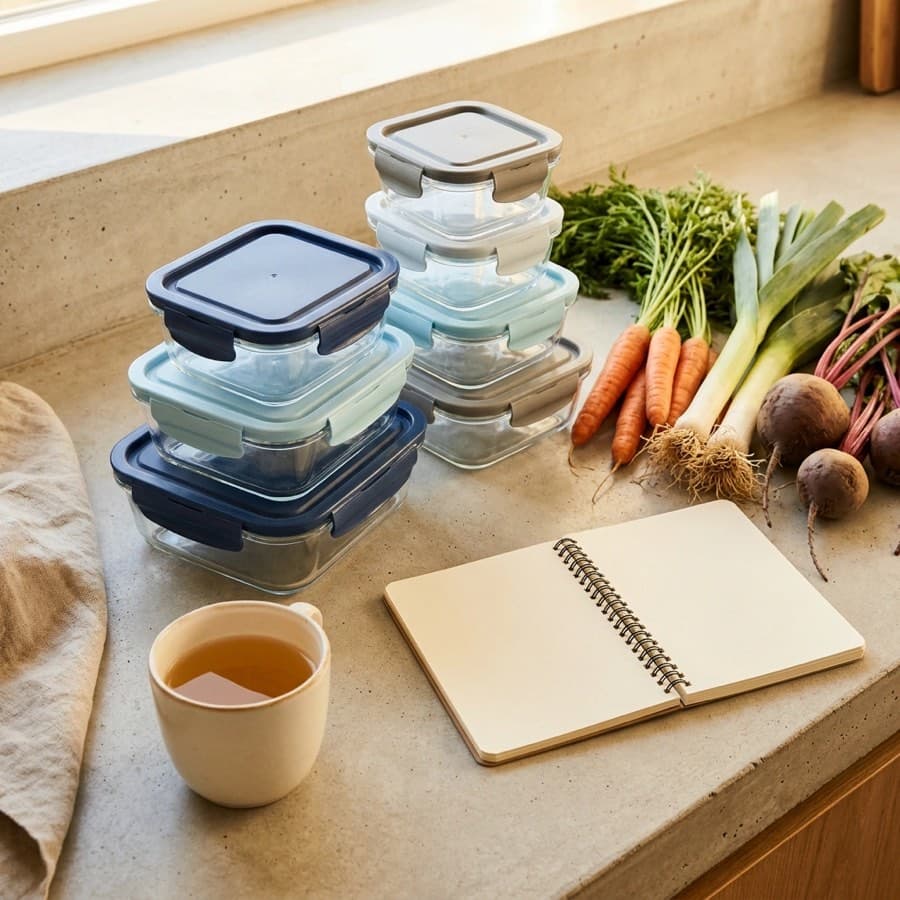
- Airtight containers, ideally glass or sturdy plastic that can go in the microwave. One per meal.
- Two sheet pans and one large pot: they let you cook several things at once.
- A sharp knife and a large cutting board. Chopping is where most of the time goes.
- Labels and a marker, or masking tape, to write the dish and the date.
- A timer. You will run several things in parallel, and a timer is your memory.
The plan, step by step
The day before: choose and shop
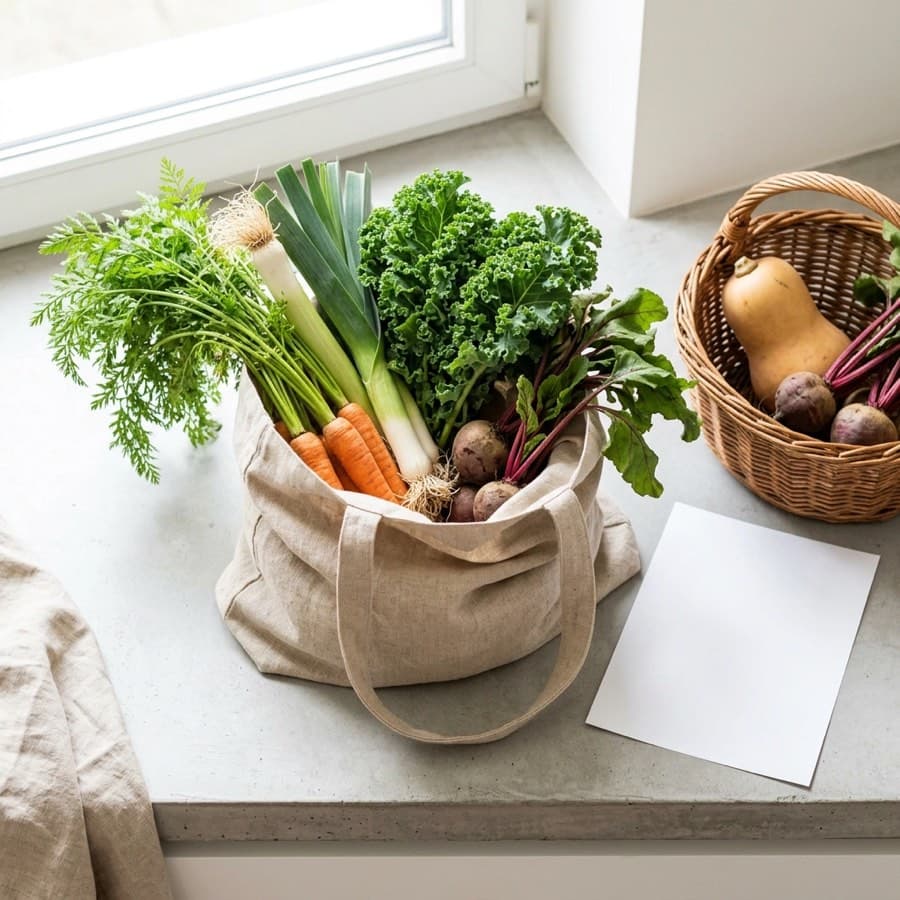
Pick two or three recipes that share some ingredients (the same vegetable, the same grain), so your list stays short. A good first combination is one dish with meat or fish, one vegetarian dish, and one dish that freezes well. Write one shopping list for all of them and buy everything the day before, so you start cooking with everything at hand.
Cooking day, hour by hour
- Set up (10 minutes). Put every ingredient on the counter, clear the sink and empty the dishwasher. Turn the oven on if a recipe needs it.
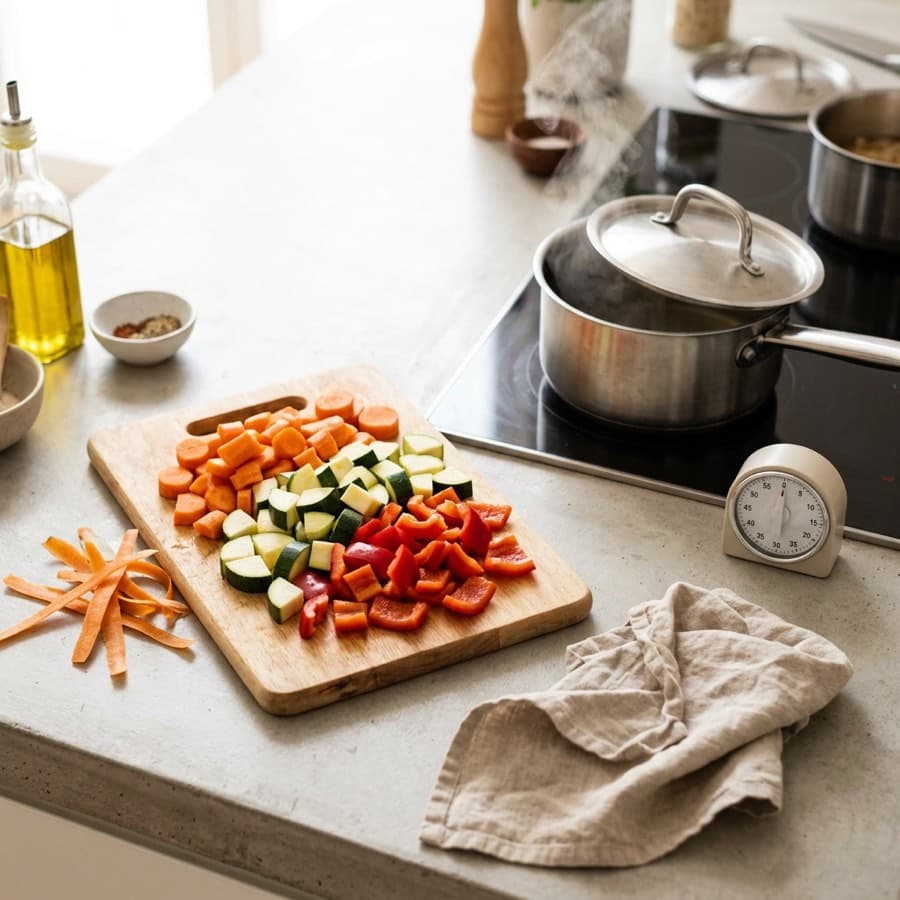
- Chop everything first. Wash and cut all the vegetables, mince the garlic, grate the cheese. Doing all the chopping in one block is faster than doing it recipe by recipe.
- Start the longest dish. Anything that needs the oven or a long simmer goes first: roasted vegetables, a stew, rice or grains. While it cooks, you work on the others.
- Cook in parallel. The oven roasts, the pot simmers, and you cook the quick dish on the stove. Use your timer for each step.
- Cool before you close. Spread hot dishes in shallow containers so they cool faster, and close the lids once the steam is gone.
- Portion and label. One container per meal, with the name and the date.
Store the same day
Cooked food should not stay at room temperature for long. The USDA recommends putting leftovers in the refrigerator within two hours of cooking. Keep what you will eat in the next three or four days in the fridge, and freeze the rest.
Common first-time mistakes
- Too many recipes. Start small. Three dishes done well beat six done in a panic.
- Closing containers while the food is hot. Condensation drips back on the food and hurts the taste and texture. Let it cool first.
- No labels. After two days, you will not remember what is in the box or when you made it.
- Cooking everything the same way. Mix methods (oven, stove, raw prep) so you are never waiting on a single pan.
- Forgetting the fresh part. Salad greens, herbs and crunchy toppings keep better stored separately and added at the last minute.
How to choose recipes that batch well
Not every recipe is a good batch recipe. Look for four qualities:
- It reheats well. Stews, curries, chilli, pasta bakes, grain bowls and roasted vegetables are forgiving. Delicate fish, fried food and anything that needs to be crisp are not.
- It keeps for three to four days. Dishes with sauce, beans, lentils or grains hold up. Salads with dressing do not, so keep dressings separate.
- It shares ingredients with your other recipes. The same onions, carrots, rice or spice mix across two dishes shortens the list and the prep.
- It freezes, at least one of them. A freezer-friendly dish is your insurance for the end of the week, or for next week.
A balanced first trio might be a chicken or bean dish with rice, a vegetarian tray bake, and a soup or stew that freezes well. Add a make-ahead breakfast once you are comfortable.

A sample first session, hour by hour
Here is a realistic schedule for three recipes and roughly two and a half hours. Adjust it to your own pace.
| Time | What you do |
|---|---|
| 0:00 | Preheat the oven. Put everything on the counter. Fill the sink with hot soapy water. |
| 0:10 | Wash and chop all vegetables, mince garlic and onions, measure spices. |
| 0:45 | Vegetables on the sheet pan into the oven. Rice or grains on the stove. |
| 0:55 | Start the stew or soup in the big pot, then lower the heat. |
| 1:10 | Cook the chicken or beans in a pan while the oven and the pot work. |
| 1:40 | Stir, taste, adjust seasoning. Wash the first dishes. |
| 2:00 | Take the trays out. Spread everything in shallow containers to cool. |
| 2:15 | Portion into labeled containers once the steam is gone. |
| 2:30 | Wipe the counter, put the containers in the fridge and freezer. |
Troubleshooting: the usual problems
- "Everything tastes the same by Thursday." Vary the finishing touch: a different sauce, herbs, lemon juice, pickled onions or a crunchy topping on each portion. Cook plain bases (rice, roasted vegetables, a protein) and mix them in two or three different ways.
- "The food gets soggy." Cool completely before closing, keep sauces and crunchy parts separate, and reheat in a pan or oven rather than only in the microwave.
- "I ran out of time." You planned too many recipes. Next time, keep two, or choose one slow dish and two fast ones.
- "My fridge is full." Freeze the last two days of food right away. A shared set of identical containers stacks better.
- "I'm bored of the same meals." Rotate recipes every week. Repeating a dish every two weeks is a good rhythm.
A quick food-safety checklist
- Cook meat and poultry to a safe internal temperature (poultry 165 °F / 74 °C).
- Refrigerate within two hours of cooking (one hour if the room is above 90 °F / 32 °C).
- Cool in shallow containers; do not put a large hot pot straight in the fridge.
- Eat refrigerated leftovers within three to four days, and freeze what you will not eat by then.
- Reheat to 165 °F (74 °C), and bring sauces and soups to a rolling boil.
These are the USDA's recommendations for leftovers. In France, the ANSES is stricter for rice, pasta, soups and purées (48 hours): when you cook those, eat them first.
How Nonnio makes it easier
Nonnio is built around exactly this routine. It composes a menu from your diet and tastes, writes a single shopping list, then guides you step by step: it orders the steps so the oven heats while you chop, merges identical tasks across recipes, and runs timers for you. Afterwards, your fridge shows how many days each dish has left. You can see how it works or browse the recipes.
Your first-week checklist
- Choose two or three recipes, one of them freezer-friendly.
- Shop once, the day before.
- Block two to three hours and chop everything first.
- Start the longest dish first, then work in parallel.
- Cool, portion, label, and store the same day.
Sources
Frequently asked questions

Plan on two to three hours for a week of lunches or dinners with two or three recipes. It gets faster after the first one, because you already know your kitchen and your order of work.
Two or three. One main dish with protein, one vegetarian dish, and one that freezes well is plenty. Add one recipe per week as you get comfortable.
They overlap. Meal prep often means portioning individual meals, while batch cooking means cooking larger quantities of a few dishes at once. Most people mix both.
A few airtight containers (glass is easy to reheat), two sheet pans, one large pot, a sharp knife, labels and a timer. You probably own most of it already.
This article is for information only and does not replace the advice of a health or nutrition professional. Storage times are cautious guidelines.